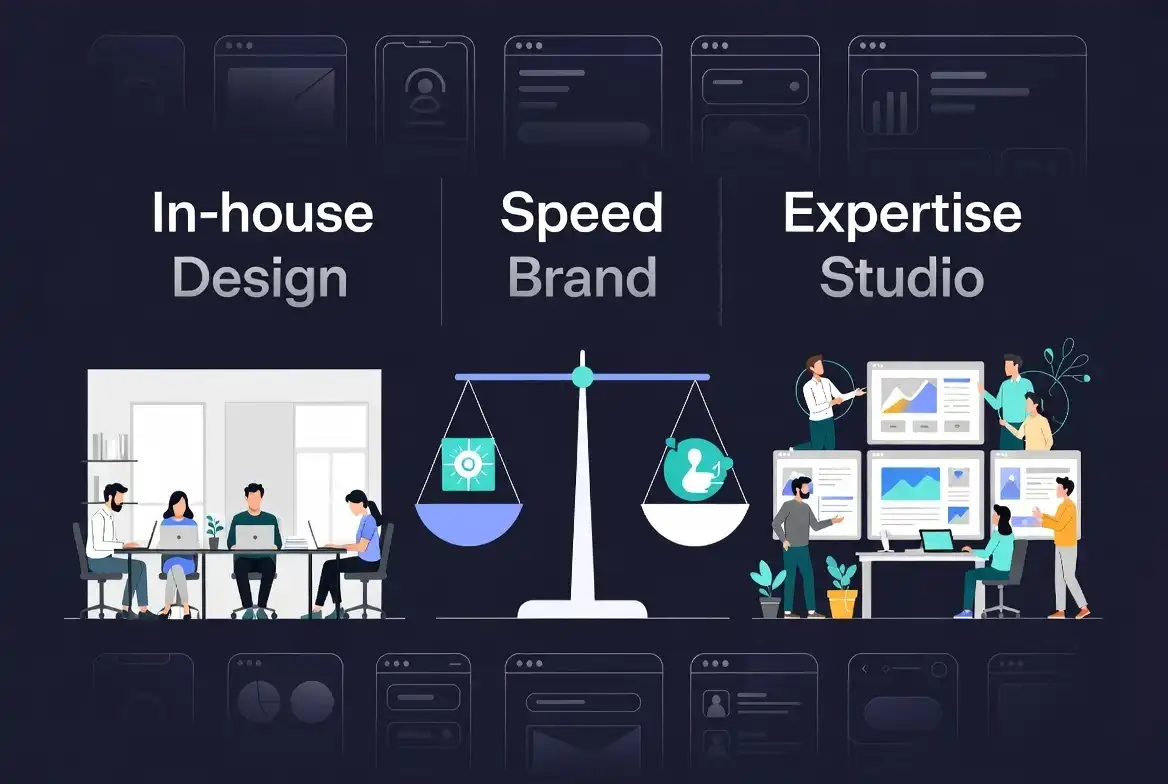

The term "UX agency" has been part of the digital product world for a long time. Search for a UX agency on Google and hundreds of results come back. Each one says it does user experience design, each one showcases its projects, each one talks about its process.
So what really separates them? And more importantly, is what you need a UX agency or a UX studio?
The question gets critical for teams building fintech, SaaS, e-commerce and data-heavy dashboard products. Because the job is no longer just designing screens; it is building products that scale, that hold up over time, and that grow against measurable metrics.
In this article we look closely at the difference between a UX agency and a UX studio through three lenses: business model, approach to process, and the metrics each one answers to.
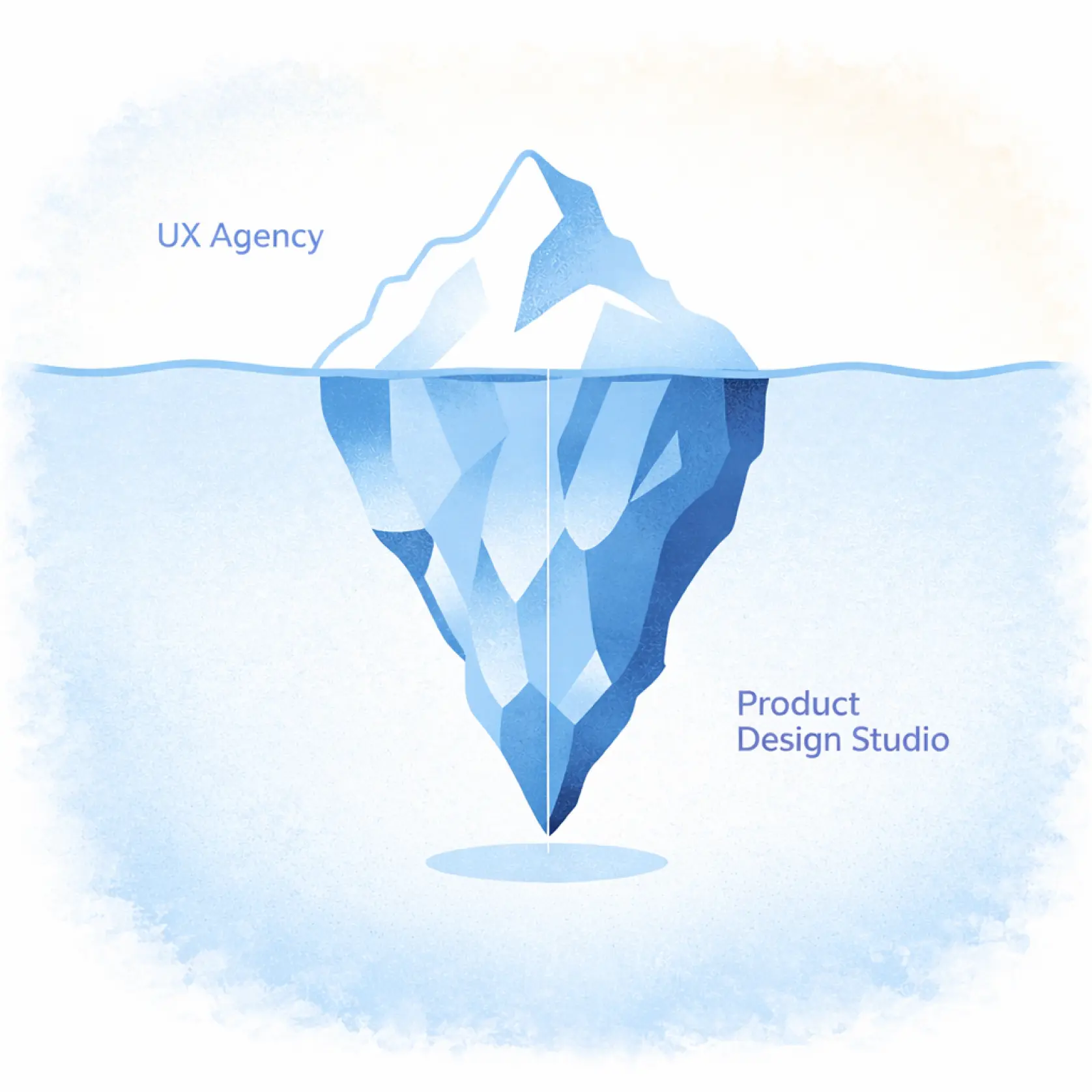
What Is a UX Agency, and What Does It Actually Do?
A UX agency is essentially an organization that provides user experience design as a service to companies. It usually works project by project and produces deliverables within an agreed scope.
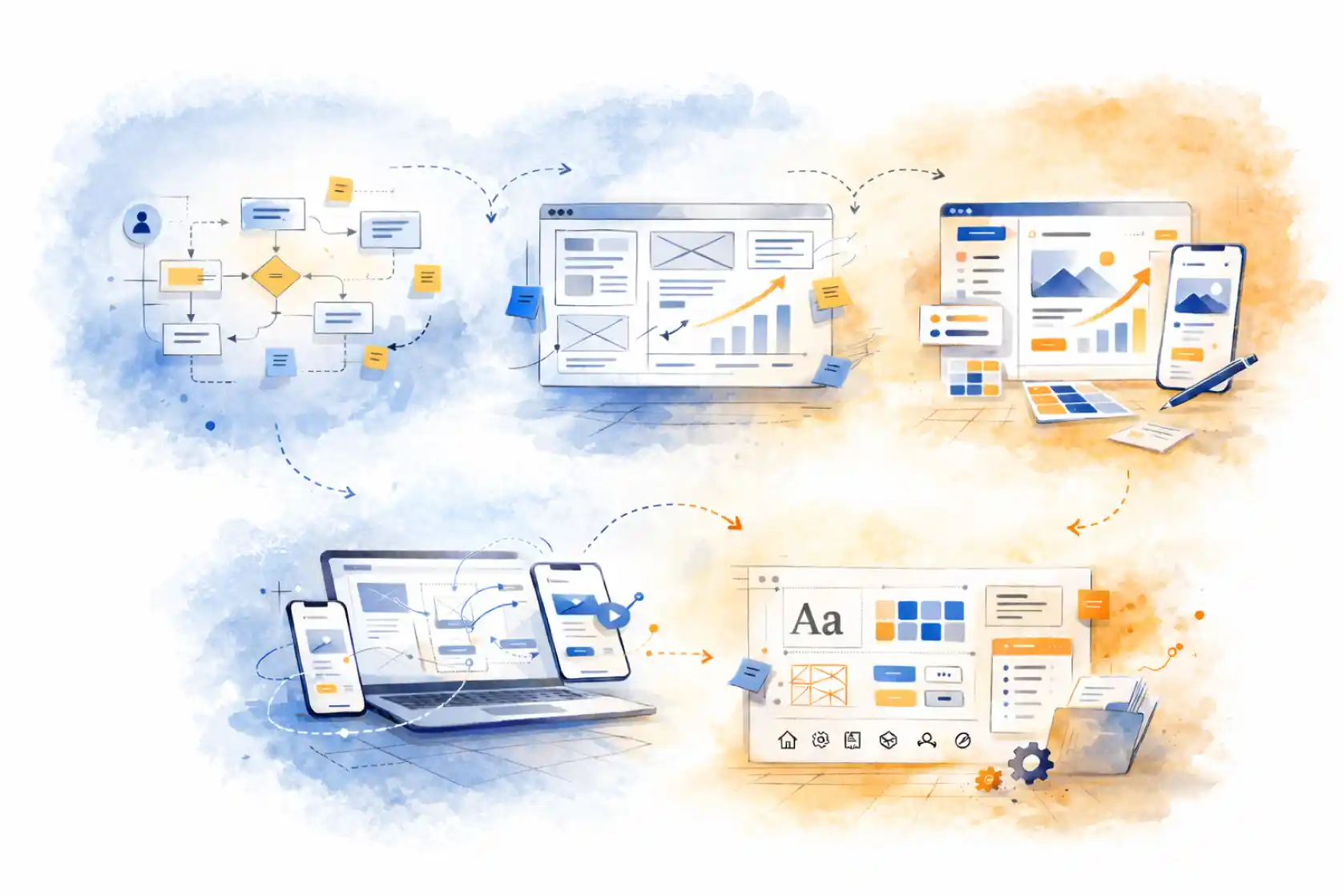
Those deliverables are most often the following:
- User flows
- Wireframes
- UI designs
- Prototypes
- Design system documentation
The UX agency model is usually built on a "take the brief, design it, hand it over" logic. That structure is highly effective when the scope is clearly drawn. If an existing product's interface needs a refresh, or a specific module has to be designed, a UX agency can deliver a fast and focused solution.
There is a critical caveat here, though: a UX agency is mostly a service provider. How far it gets involved in strategic decision-making, and how much ownership it takes of the business model, varies from project to project.
If your product's problem has not been clearly defined, if user behavior has not been analyzed, or if growth targets have not been built into design decisions, producing screens alone may not be enough.
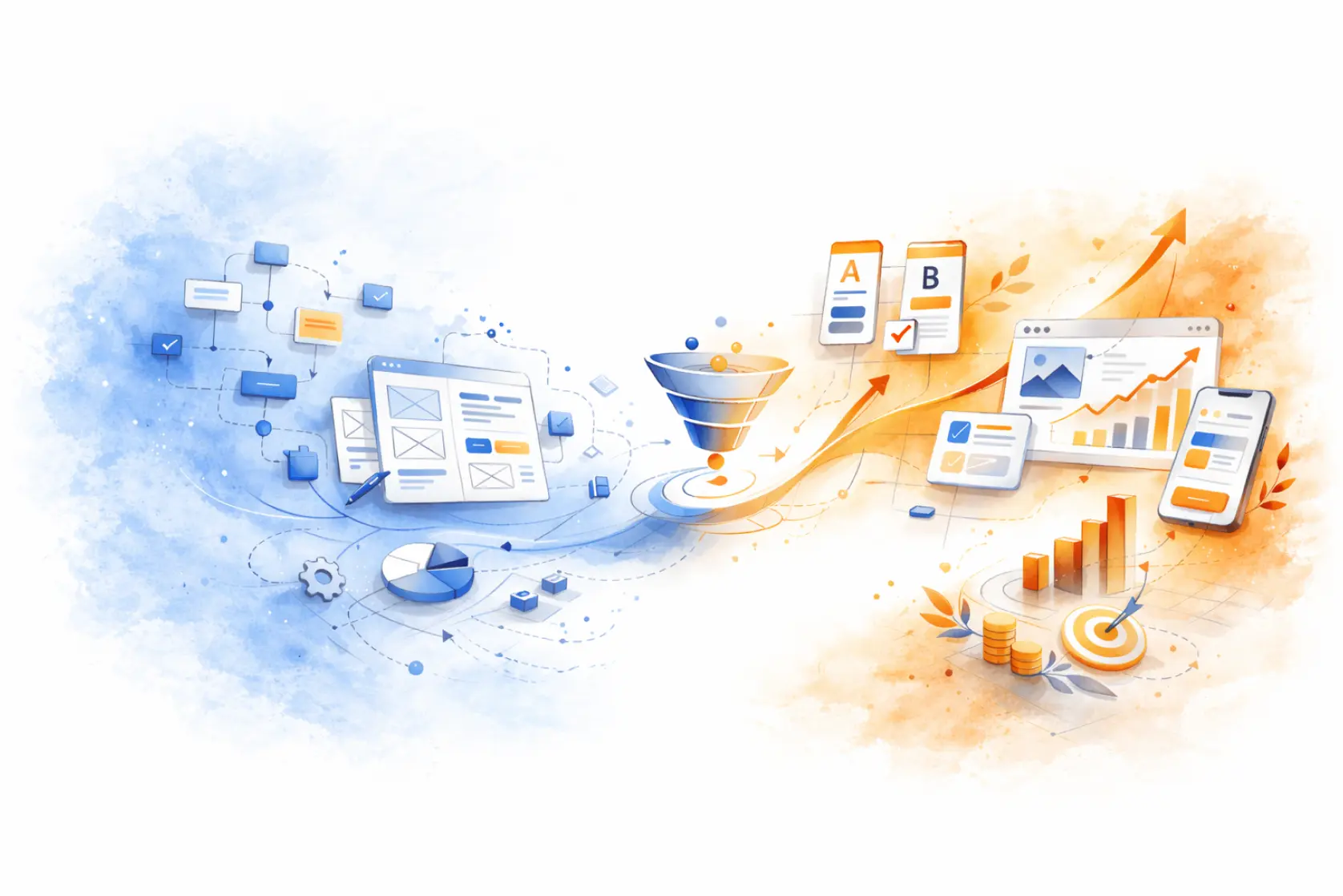
What Is a UX Studio? Just a Different Name, or Genuinely Different?
A UX studio treats design not as a handover job but as a strategic part of product development. The focus here is the product, not the screen. The process does not end once the design is produced; it carries on through user behavior, business goals and performance metrics.
Where a UX agency answers the question "how should we design this?", a UX studio asks a prior one: "Are we even designing the right product?"
That difference in approach shows itself most clearly in complex products. When you design a loyalty-driven mobile experience, for example, the issue is not just an attractive interface; behavioral design, the motivation to come back, and reward psychology move to the center of the work.
In a product built around a loyalty program, the work does not stop at designing a campaign screen; you have to construct an experience that leads the user toward another purchase. Behavioral flows, the reward structure and motivation triggers have to be handled together.
An output like that is far less an agency deliverable than a product strategy partnership.
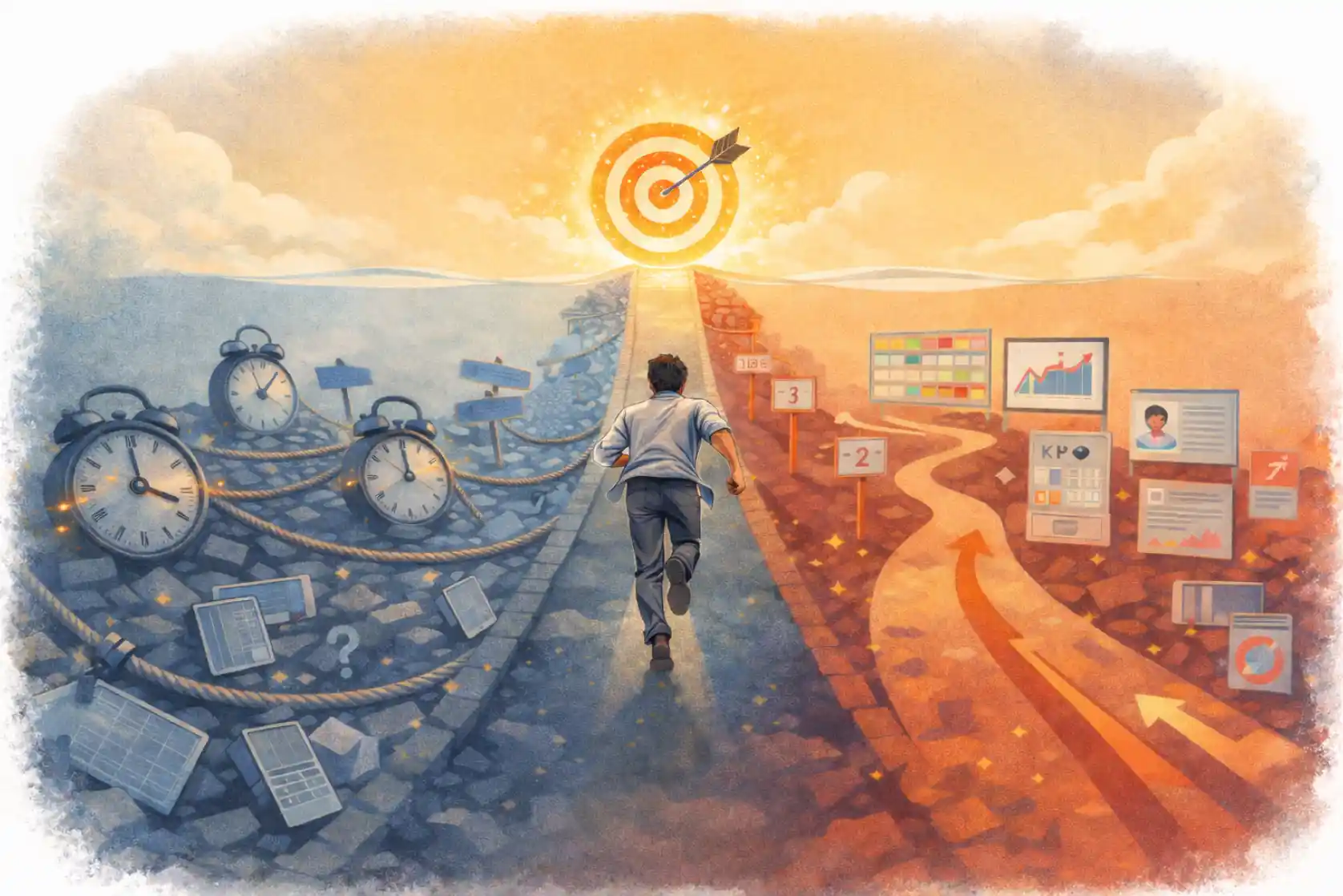
Project Focus or Product Partnership?
The UX agency model generally lasts exactly as long as the project does. The scope is set, a timeline is drawn up, and the work is delivered. This model is fast, particularly where the brief is clearly defined.
A UX studio, by contrast, focuses on the product's life cycle. It stays involved from MVP to scale-up, from adding a new module to ongoing optimization.
This difference in approach is clearest in data-heavy dashboard projects. In a product carrying a dense analytics and data layer, the issue is not simply placing charts on a page. You have to understand which metric the user actually decides on, simplify the information architecture, and shorten the path to a decision.
In projects like these a UX agency produces screens; a UX studio designs the decision experience.
Projects of this kind require data hierarchy, filtering logic and a modular dashboard structure to be addressed together.

The Metrics Gap Between a UX Agency and a UX Studio
For a UX agency, success usually means the quality of the deliverable and the handling of the schedule. Did the project finish on time? Did the design meet expectations?
A UX studio defines success differently. Success is measured by business results.
Did the onboarding drop-off rate fall? Did the conversion rate rise? Did revenue per user go up? Did support requests decrease?
In fintech products especially, trust design carries critical weight. Users are afraid of making a mistake inside a financial application. Breaking down those barriers is not a question of aesthetics but of psychological design.
When Is a UX Agency the Right Choice?
If your existing product is well defined, if all you need is an interface modernization, or if a narrowly scoped module has to be designed, a UX agency is the right choice. It is fast, operational, and produces a clear deliverable.
When Does a UX Studio Make More Sense?
If the product is still at the idea stage, if an MVP is being built, if you have a conversion problem, or if you work in a regulated industry, the UX studio approach produces a more strategic and more sustainable result.

Conclusion: The Approach Decides, Not the Label
The difference between a UX agency and a UX studio is not merely a choice of words. It is a difference in how the work gets done.
A UX agency produces design. A UX studio builds product. A UX agency hands over. A UX studio takes ownership.
If your goal is not just good-looking screens but sustainable growth and conversion optimization, the approach of the partner you work with carries critical weight.
In digital products, what makes the difference is not aesthetics but a design process that begins with the right questions.