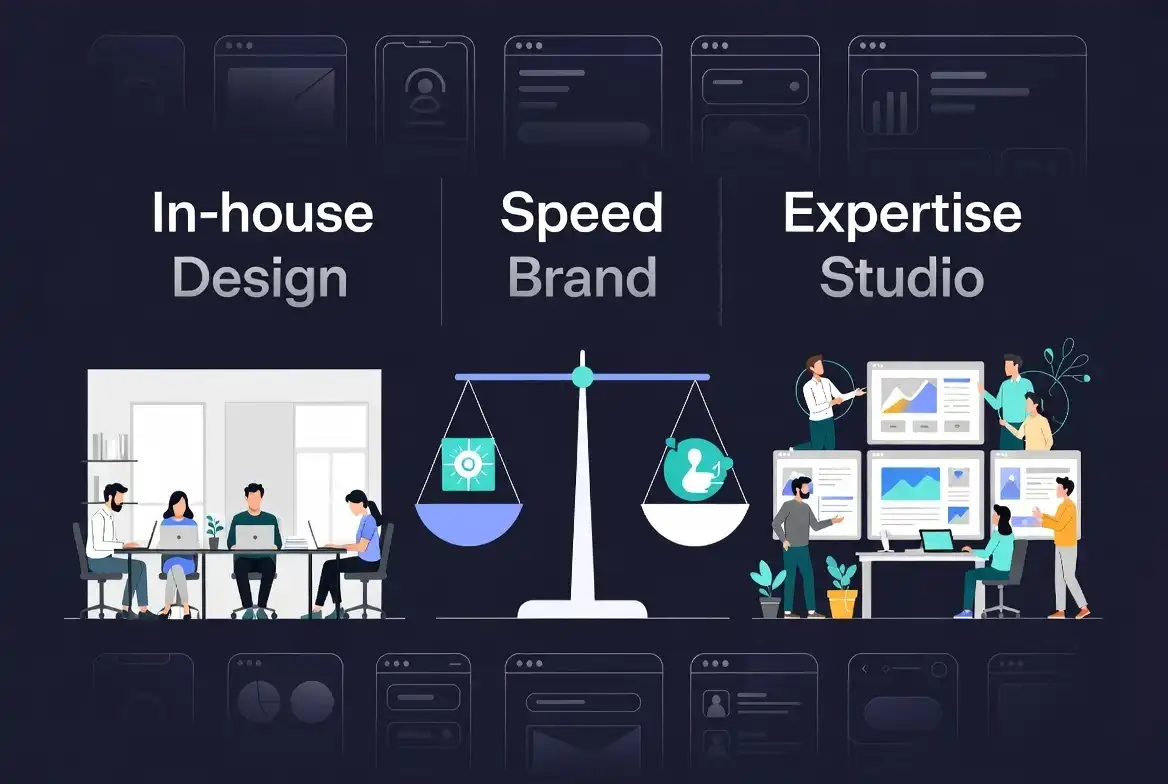
Founders of product-led brands keep running into the same critical dilemma:
Should you hand your product design over to a design studio, or build an in-house design team of your own?
That decision shapes how fast your brand grows, how good your product feels and how competitive you stay over the long run. And to get it right, you really only need to answer three fundamental questions.
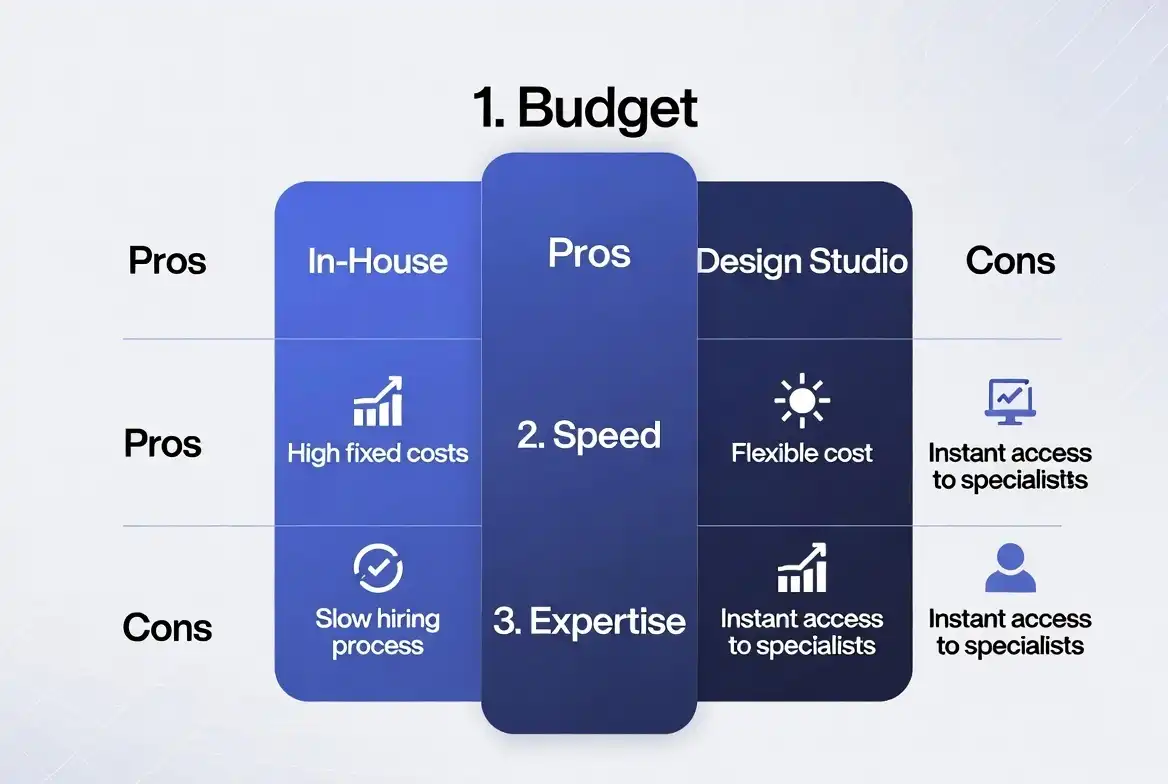
1. How Much Budget Do You Have?
Budget is one of the most decisive factors in this call.
The moment you start planning an in-house team, it stops being only about salaries: recruitment costs, benefits, office and equipment overhead, continuous training and performance management all enter the picture quickly. For early-stage and mid-sized brands in particular, these costs can climb in ways that are hard to forecast.
Working with a design studio, the same budget buys access to a far more experienced and specialised team. Instead of carrying the fixed cost of full-time headcount, a flexible, project-based setup usually produces more efficient and higher-quality results.
2. How Quickly Do You Need Results?
Building an in-house design team takes time. Finding the right people, settling them into your culture, establishing the processes and getting the team genuinely productive usually takes three to six months, sometimes longer.
For product-led brands that want to iterate fast, ship new features or improve the user experience within weeks, that ramp-up period is a serious disadvantage.
With a design studio, you can start acting immediately. Product strategy, UX/UI design or specific improvements can be under way in the very first week, so results arrive quickly.
3. What Level of Expertise Do You Need?
This may well be the most important point.
A single designer or a small in-house team tends to drift into a "knows a little of everything" profile. In product markets where competition is fierce, that generalist setup can quietly cap your design quality.
Inside a design studio, the picture is quite different:
There is a dedicated specialist for every discipline:
- Product managers
- UX researchers & UX designers
- UI designers
- Senior product designers
- And, when the work calls for it, roles such as motion designer or design systems specialist
This spread of expertise keeps your product experience at the highest possible level and holds the design to professional standards.
Where Things Stand Today

Many successful product-led brands have already left the "design studio or in-house team?" debate behind.
The focus has moved to "giving the right work to the right structure."
Because design studios work continuously on the products of many brands across different industries and scales, they stay close to:
- the newest design trends,
- user experience best practices,
- modern design tools and methodologies
Building that depth of accumulated knowledge inside a single brand is difficult to justify in terms of both time and cost.
Conclusion
So, should you work with a design studio or build an in-house team? There is no single correct answer to that question.
The right choice takes shape around your brand's current budget, its speed expectations and its need for expertise.
What matters is choosing the structure that can run your product design in the highest-quality, most user-centred and most professional way. That structure might be a design studio, or it might be a strong in-house team.
The real goal never changes: raising your product quality and giving your users an outstanding experience.